
13 Years Later, Guests Still Ask for Mr. Pop
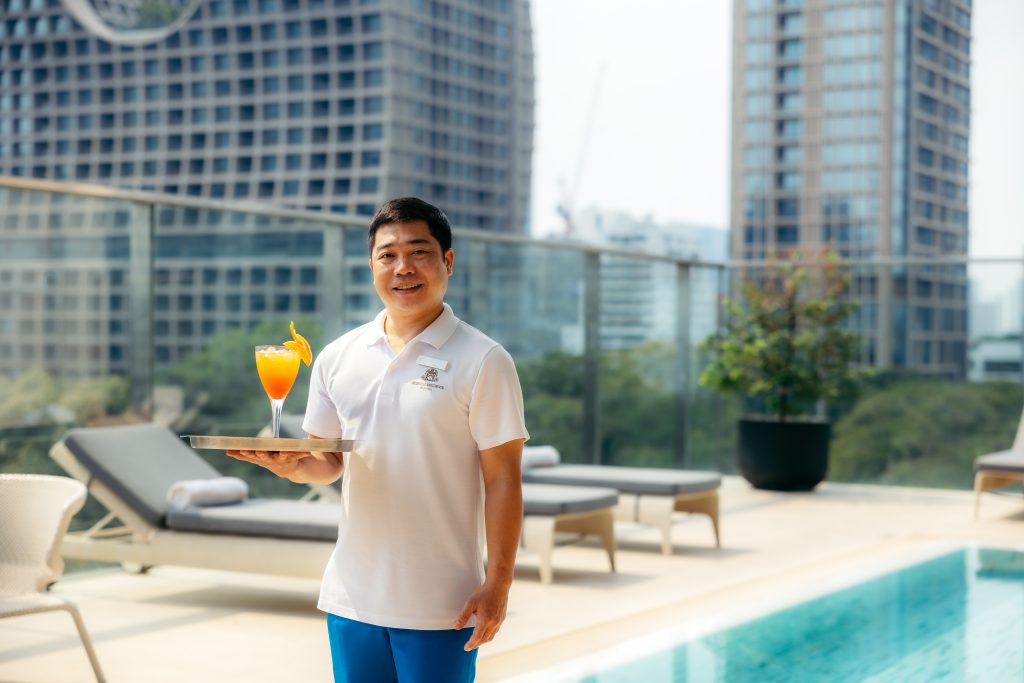
If you meet Pop, or Kittipong Keawmai, at The Play Deck at Oriental Residence Bangkok, the first thing you notice is probably his smile.
Relaxed. Easy. Familiar.
The kind of smile that immediately makes guests feel comfortable ordering another drink, asking for recommendations or simply staying by the pool a little longer.
What most guests would never guess is that Pop once considered himself painfully shy.
“I did not dare speak much when I was younger,” he says honestly. “I was very quiet.”
Today, after 13 years at Oriental Residence Bangkok and more than two decades in hospitality, he has become one of the familiar faces guests remember most. Returning visitors know him by name. Some ask specifically whether “Mr Pop” is working before heading to the pool.

But confidence, for him, was never natural.
It was learned slowly, one uncomfortable interaction at a time.
Originally from Nan province, Pop moved to Bangkok immediately after finishing school. There was no long term career plan behind the decision. Like many young people arriving in the city for the first time, he simply wanted work, income and a way to support his family back home.
Hospitality arrived almost accidentally.
A friend suggested bar work. Pop agreed without really understanding what bartending actually involved.
“At first, I only knew it meant making drinks,” he says with a laugh.
There was no formal training. No hospitality degree. No cocktail school.
In the early years, learning meant carrying a notebook everywhere and writing everything down by hand. Cocktail recipes. Measurements. Wine names. Garnishes. Anything senior bartenders mentioned during shifts.
Back then, there were no smartphones, online tutorials or digital recipe databases waiting to help him.
“There was only paper and pen,” he says.
Even then, Pop understood something important very early: consistency mattered.
Two bartenders could follow the same recipe and still produce completely different drinks depending on technique, measurements or attention to detail. So he trained himself to remember everything carefully, repeating recipes again and again until they became instinctive.
“I was afraid of forgetting,” he says simply.
Over time, the drinks became easier.
The people did not.
As a naturally introverted person, guest interaction initially felt exhausting. During his earliest jobs, the bar itself remained hidden behind service doors, meaning he rarely needed to face customers directly. Drinks were prepared quietly in the back before servers delivered them.
That suited him perfectly.
Then came hotel bars.
Suddenly, guests sat directly in front of him.
Watching. Waiting. Talking.
The pressure changed immediately.

“You feel nervous because people are looking at you all the time,” he recalls. “At first, it did not feel like myself at all.”
What surprised him most was that nobody could solve the discomfort for him.
No amount of training removed the anxiety completely. No manager could suddenly make him confident overnight.
Eventually, Pop realised he only had two choices: retreat from hospitality entirely or force himself to adapt.
So he stayed.
Little by little, he pushed himself to speak more. To greet guests first. To stop overthinking every interaction. Sometimes the conversations were simple. Directions to the fitness centre. Poolside menu recommendations. Questions about the hotel.
Sometimes communication became far more complicated.
When he first began working with international guests, his English was extremely limited. Accents especially became difficult to understand, particularly when guests spoke quickly.
“There were many times I did not fully understand,” he admits.
Instead of pretending, he learned to slow conversations down calmly, asking guests to repeat themselves when necessary while relying on gestures, observation and patience to bridge the gaps.
Gradually, he gained enough confidence to go on.
Today, much of Pop’s role at The Play Deck revolves around exactly the kind of guest interaction he once found intimidating.

Positioned beside the swimming pool, the venue operates differently from a traditional restaurant. Guests arrive wanting to relax. Some spend entire afternoons reading beside the pool. Others order cocktails between swimming sessions or sit quietly watching the Bangkok skyline.
The atmosphere is intentionally calm.
And strangely enough, Pop now prefers it that way.
“I like the peaceful feeling there,” he says.
Unlike larger restaurants where teams constantly surround each other, working poolside often means managing service independently for hours at a time. During busy periods, he handles drinks, food service, guest requests and operational coordination largely on his own.
His calmness under pressure is one reason management trusted him with the role, often trusting him to work independently.
“I think they believed I could handle it,” he says modestly.

The Play Deck menu itself reflects that relaxed atmosphere. Thai dishes, pizzas, burgers and lighter poolside snacks dominate the food selection, while refreshing cocktails remain especially popular during Bangkok’s hotter months.
If guests ask for recommendations, Pop almost always suggests two drinks first: Margaritas and Mojitos.
“People drink them by the pool and immediately feel refreshed,” he says.
But even cocktails become personal.
Some guests request less sugar. Others prefer sharper citrus flavours or no mint at all. Pop quietly adjusts each drink based on those preferences, believing hospitality should never feel rigid.
“You try to make guests comfortable,” he says simply.
That mindset extends beyond cocktails.
Throughout the interview, Pop returns repeatedly to one idea: service is really about paying attention.
Not ignoring guests when they look uncertain. Not missing small details. Not becoming careless.
For him, cleanliness also sits at the centre of hospitality. Smudged glasses, misplaced equipment or untidy workstations immediately bother him, even after all these years.
“You notice small things automatically,” he says. “You want everything to feel right.”

Perhaps that sense of responsibility explains why Oriental Residence Bangkok now feels deeply personal to him after 13 years.
He speaks about the hotel less like a workplace and more like a second home.
The same motorcycle route from Wongwian Yai.
The same locker room routine.
The same poolside bar.
Day after day. Year after year.
When asked how he thinks he will feel on the day he eventually leaves, Pop pauses for the first time during the conversation.
Then he laughs quietly. “I will probably cry,” he admits.
Not because of the cocktails. Or the bar itself.
But because somewhere over those 13 years, the shy young man who once struggled to speak to strangers slowly built an entire life there.
Explore more: ONYX Dining
Book your stay: Oriental Residence Bangkok

Story: Sue Rattanamahattana • Photography: Poonsawat Sudtama
ABOUT HEARTMADE
Created to celebrate the 60th anniversary of ONYX Hospitality Group, Heartmade is a series of heartfelt stories inspired by the people who make every stay memorable, from dedicated team members to cherished guests across Amari, OZO, Shama, Oriental Residence, as well as our spa and dining brands.
Through personal memories, meaningful connections, and moments of genuine care, the series celebrates the warmth and spirit of hospitality that have brought people together for six decades. Stay tuned for more inspiring stories from the Heartmade series.